
What is Drowning?
Drowning is a process with three possible outcomes; 1. Death, 2. Survival with no injury, or 3. Survival with injury.
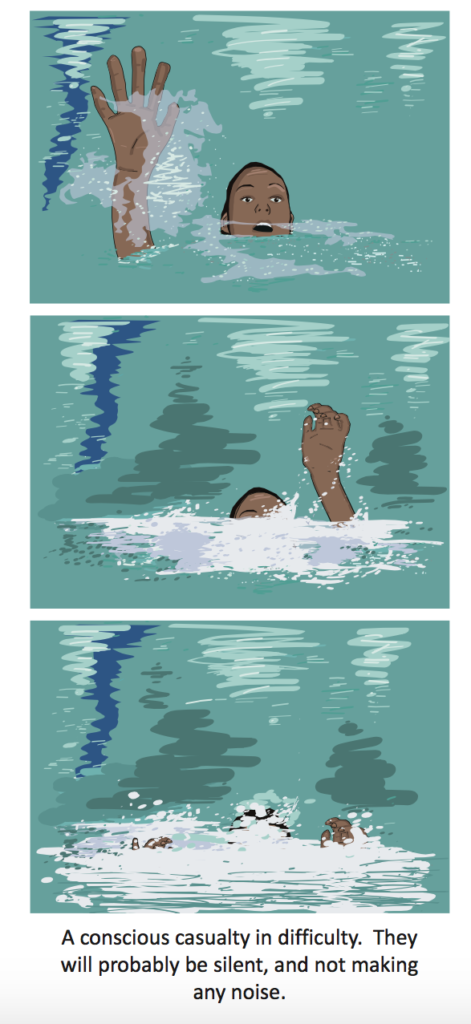
For a long time Drowning has been misrepresented as only death. A new definition was agreed in 2005, which describes drowning as a process with three outcomes.
“Drowning is the process of experiencing respiratory impairment from submersion or immersion in liquid.”
There are three drowning outcomes:
- Death
- Survival without injury
- Survival with injury (including brain damage)
Drowning can either be fatal or non-fatal. For many, non‑fatal drowning can cause lasting brain damage, leading to long‑term cognitive and functional disability.
Outdated terms should no longer be used, including ‘dry’, ‘wet’, ‘active’, ‘passive’, ‘secondary’, and ‘near‑drowning’.
Drowning is a process which can take up to 72 hours (3 days) and the effects of drowning may continue after someone has come out of the water. If you think someone experienced difficulty breathing in water, that means they have experienced drowning. Call the emergency services immediately. Even if CPR is not required, they should be taken to hospital for further checks and treatment.
Reference: A new definition, van Beeck